First Unit of Stung Meteuk II and III Hydropower Stations Successfully Completes 72-Hour Trial Operation Ahead of Schedule
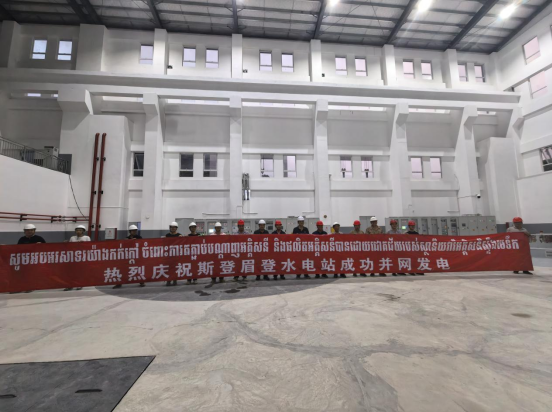
At 6:00 PM on 3rd June, local time in Cambodia, Unit 1 of the Stage III hydropower station project at Stung Meteuk successfully completed its 72-hour trial run. The unit is currently operating with load, and all indicators are stable. Despite experiencing two border conflicts, which severely impacted the schedule, the commissioning task was completed two months ahead of the contract milestone, laying a solid foundation for the subsequent full plant commissioning.
After the level II and III hydropower stations are fully commissioned, the estimated average annual power generation will exceed 305 million kWh. This will effectively alleviate local power supply pressure, enhance confidence in hydropower development in Cambodia, and provide strong momentum for the optimization and upgrading of the regional industrial structure as well as high-quality economic and social development.
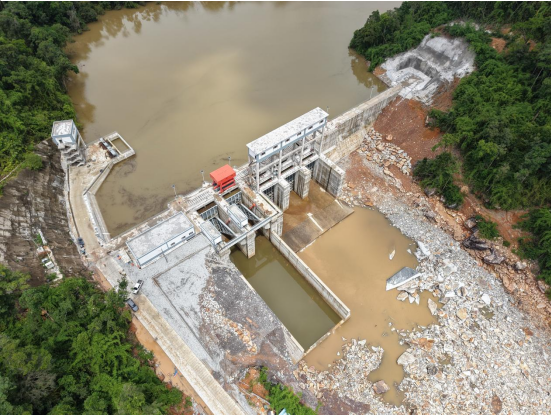
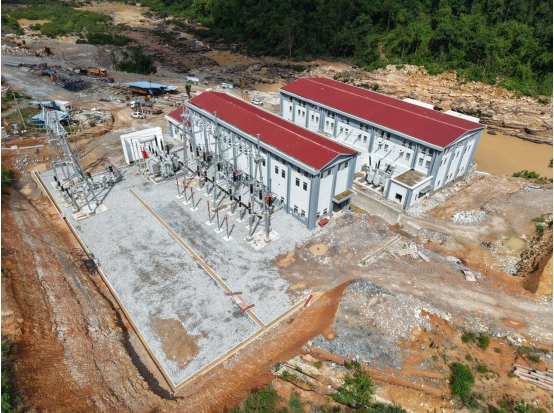
The Stung Meteuk cascade hydropower station is located at the border between Kampong Cham Province, Cambodia, and Ubon Ratchathani Province, Thailand, and is developed in three stages. Our company undertook the civil construction and electromechanical installation works for the level II and III. The level II has a design flow rate of 110.8 m3/s, a gross head of 60 m, an installed capacity of 53 MW, and an annual generation of 174 million kWh. The level III has a design flow rate of 126.6 m3/s, a gross head of 39.90 m, an installed capacity of 40 MW, and an annual generation of 131 million kWh. The project construction period is 34 months.
Since the commencement of the project, the project team has consistently adhered to the principles of "safety first, quality-oriented, and scientific management", strictly organizing the construction in accordance with relevant national and industry standards to ensure that both progress and quality standards are met. Key processes are closely monitored on a daily basis, with timely corrections to effectively address the risks of work stoppages due to border conflicts. Meanwhile, active coordination and communication have been maintained with the owner, supervisor, and local parties to facilitate the smooth clearance of materials and personnel, minimizing external interference with the construction. Furthermore, through in-depth integration of multiple disciplines such as civil engineering, steel structures, and mechanical and electrical installations, along with technical disclosure to the work teams and centralized allocation of resources, critical milestones have been tackled intensively while non-critical processes have been progressed in parallel, significantly reducing non-operational downtime.
Next, the construction team will continue to maintain a high-efficiency advancement momentum, orderly carry out the remaining unit 72-hour trial operations, and ensure that the entire station is put into production on schedule and with high quality.
Edited by: GA Department
返回列表